발목과 발
이론과 하이라이트 히스토리를 확인 할 수 있어요.
0. 발목
항목 | 내용 |
|---|---|
관절 종류 | Synovial hinge joint |
관절 구성 | Tibia + Fibula + Talus (Calcaneus는 불포함) |
주요 움직임 | Dorsiflexion & Plantarflexion |
1) 관절면: Tibia + Fibula로 구성.
강한 tibiofibular ligaments로 고정되어 Mortise(절구) 구조 형성
2) 인대 구조
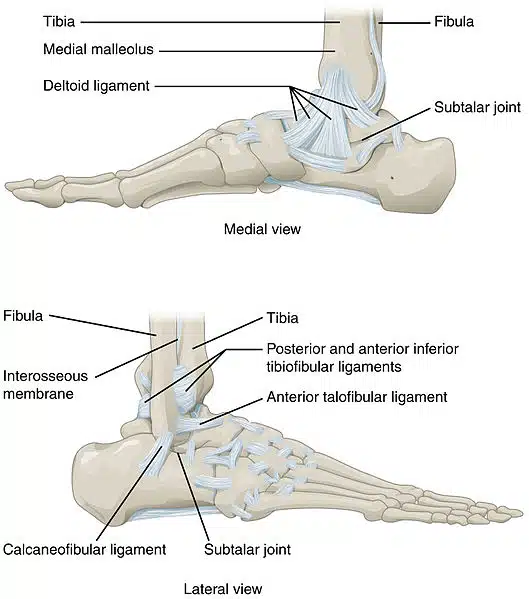
Website: TeachMeAnalysis
(1) Medial Ligament (Deltoid Ligament)
① Medial malleolus에서 일어 Talus, Calcaneus, Navicular 에 부착
② 기능: Eversion 저항
③ 구성: 4개 인대 (fan-shaped)
(2) Lateral Ligament
① Lateral malleolus에서 일어나 Talus 등으로 주행한다.
② 기능: Inversion 저항
③ 구성:
• Anterior talofibular lig.
• Posterior talofibular lig.
• Calcaneofibular lig.
• Ankle Sprain(발목 염좌)은 무게가 실린 상태에서 과도한 inversion + plantarflexion에 의해 일어난다.
- 가장 취약한 인대: Anterior talofibular lig. (Lateral lig.가 medial보다 약함 + inversion 시 긴장됨)
1. 발의 뼈
구분 | 구성 |
|---|---|
Tarsals | 발목 부위의 7개 불규칙 모양 뼈 |
Metatarsals | Tarsals와 Phalanges를 연결하는 5개의 뼈 |
Phalanges | 발가락 뼈 (2~5번째 발가락: 3개씩 / 엄지발가락: 2개) |
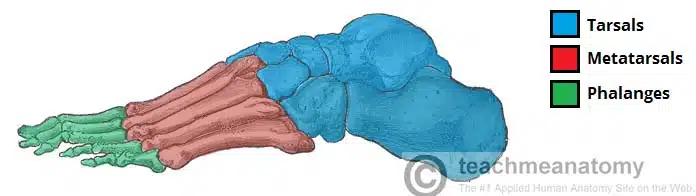
1) Tarsals
구분 | 뼈 | 특징 |
|---|---|---|
Proximal | Talus | 몸무게 전달, Ankle joint 형성 (Tibia, Fibula와 관절) |
Calcaneus | Heel bone, Achilles tendon 부착 | |
Intermediate | Navicular | Medial 위치, Tibialis posterior tendon 부착 |
Distal | Cuboid, Cuneiforms (Medial, Intermediate, Lateral) | Cuboid: Fibularis longus tendon 통과 |
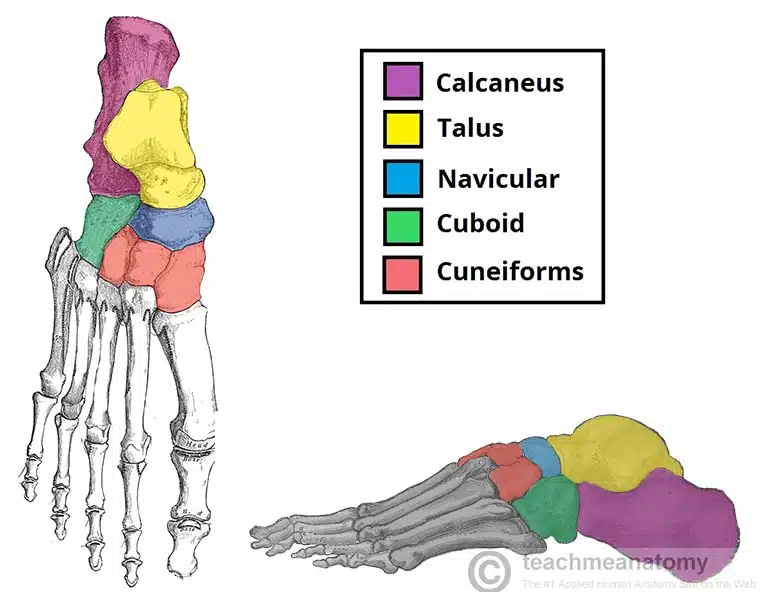
(1) 임상적으로 중요한 뼈: Talus, Calcaneus
• Talus fracture: Neck 부위 골절 흔함. 무혈성괴사(Avascular necrosis) 위험.
• Calcaneus fracture: 고에너지 축방향 외상 (낙상 등) → 아래목말관절(Subtalar joint) 손상 및 이후 관절염 가능성 있음.
2) Metatarsals
항목 | 설명 |
|---|---|
구조 | Base, Shaft, Neck, Head로 구성 |
관절 | Tarsometatarsal, Intermetatarsal, Metatarsophalangeal joints |
특징 | 1번~5번까지 번호 부여 (Medial → Lateral 방향) |
3) Phalanges
항목 | 설명 |
|---|---|
구성 | Base, Shaft, Head |
발가락별 수 | 2~5번 발가락: Proximal, Middle, Distal / 1번 발가락(엄지): Proximal, Distal |
2. 발의 근육
이론부터 문제까지, 알렌의 서재를 100% 활용하세요
※ 로그인 후 이용권 구매 시 전체 이용 가능합니다.
6,000개 이상의 문제와 연결되는 이론으로 개념과 적용을 한 번에
실제 국시와 동일한 CBT 환경으로 실전 감각 완성
틀린 문제를 매일 자동으로 챙겨주는 ‘오늘의 문제’
메모·암기카드·노트로 만드는 나만의 복습노트