호흡기계 발달
이론과 하이라이트 히스토리를 확인 할 수 있어요.
1. 개요
1) 호흡기계는 conducting portion과 respiratory portion으로 나뉜다.
① Conducting portion: 공기를 전달, 가습 및 온도 조절 (nasal cavity → terminal bronchioles)
② Respiratory portion: 실제 가스 교환이 일어나는 부위 (respiratory bronchioles, alveoli)
2) 발생학적으로는 upper respiratory tract와 lower respiratory tract로 나뉜다.
① Upper respiratory tract: nasal cavity, oral cavity, pharynx
② Lower respiratory tract: trachea, bronchi, bronchioles, alveoli
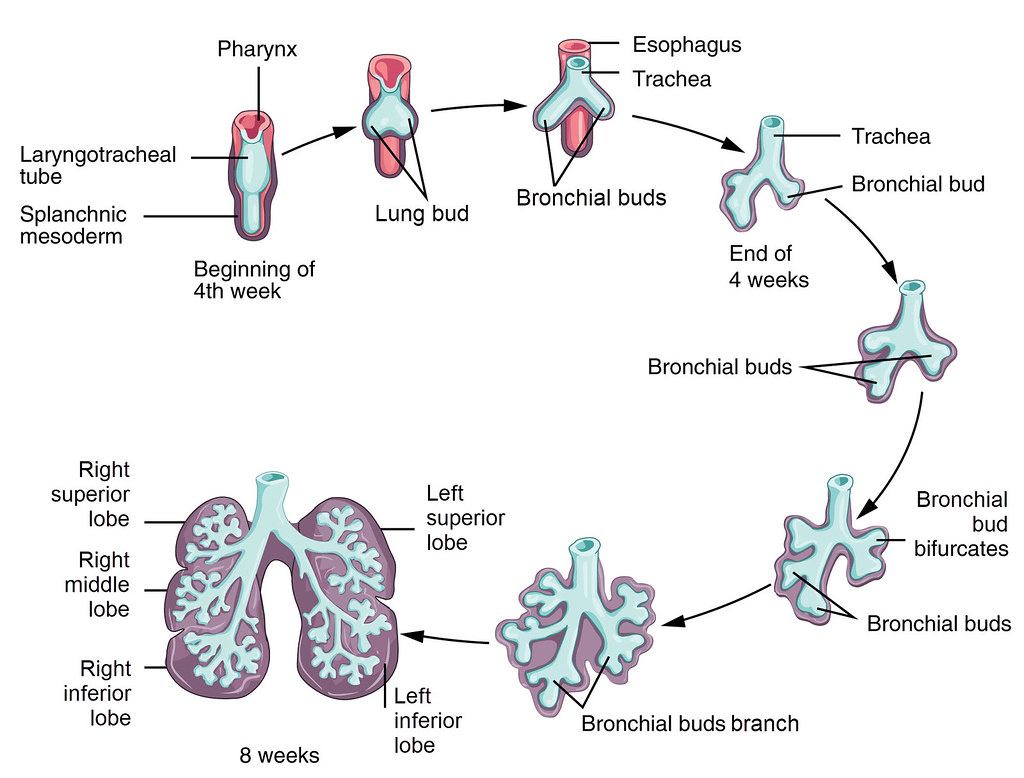
2. 초기 발생 (4주차)
: 호흡기계는 foregut (primitive gut tube의 anterior portion)에서 기원한다.
1) respiratory diverticulum이 foregut에서 ventral 쪽으로 돌출됨
2) 이후 tracheoesophageal septum이 형성되어 식도와 기관 분리됨
3) diverticulum이 primary bronchi로 나뉘며, 계속 분지하여 bronchial tree를 형성함
3. 호흡기계 발생 단계
이론부터 문제까지, 알렌의 서재를 100% 활용하세요
※ 로그인 후 이용권 구매 시 전체 이용 가능합니다.
6,000개 이상의 문제와 연결되는 이론으로 개념과 적용을 한 번에
실제 국시와 동일한 CBT 환경으로 실전 감각 완성
틀린 문제를 매일 자동으로 챙겨주는 ‘오늘의 문제’
메모·암기카드·노트로 만드는 나만의 복습노트